




When Was Washington Notified?
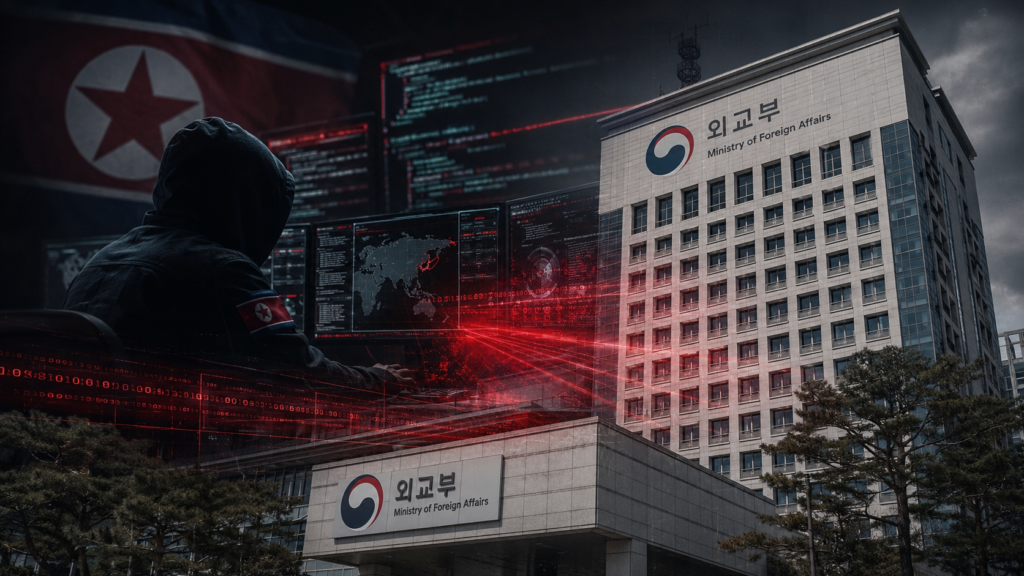
The Foreign Ministry’s Five Months of Silence and the Continuing Threat to U.S. Counterintelligence
by Jean Cummings
Co-Editor-in-Chief and Senior Columnist, The Korea Signal
“This special report examines the implications for U.S. national security of the large-scale exposure of information belonging to as many as 10,000 South Korean diplomatic and national security personnel, including hundreds of intelligence officers, and the South Korean government’s failure to disclose the incident for approximately five months. It traces how the breach may have created risks for the U.S. government, military and intelligence personnel, and the U.S.–ROK intelligence-sharing network, and explains why Washington should treat the incident as a major counterintelligence crisis.”
On July 20, 2026, South Korea’s Ministry of Foreign Affairs disclosed that the online training system operated by the Korea National Diplomatic Academy had been compromised for an extended period, resulting in the exposure of information belonging to diplomatic and national security personnel. South Korean authorities are investigating the possibility of a state-sponsored operation, including potential North Korean involvement, but the attacker has not yet been officially identified. The hacker gained control of the server sometime between April and May 2025 and maintained access to the system for approximately ten months, until February 2026. According to the Ministry of Foreign Affairs, the attacker exploited both a zero-day vulnerability—one that even the software developer did not know existed at the time—and deficiencies in the system’s security configuration. The attacker then used legitimate software privileges to remain active inside the system for an extended period.
The system contained the names, user IDs, email addresses, encrypted passwords, duty stations, and official positions of Foreign Ministry headquarters personnel, diplomats serving at overseas missions, officials seconded from other government ministries, administrative employees at diplomatic missions, and some intelligence officers deployed abroad. It also stored online training materials and information related to course assignments and participation. As many as 10,000 people may have been affected. Reports indicate that the exposed personnel included several hundred intelligence officers serving overseas under official diplomatic or government cover.
This incident cannot be treated merely as a breach involving the personal information of South Korean government employees. It is a serious matter with potentially grave consequences for the national security of the United States. South Korean diplomats and intelligence officers are the officials who conduct the day-to-day work of the U.S.–ROK alliance across the U.S. government, the armed forces, the intelligence community, Congress, defense contractors, and Washington think tanks. The simultaneous exposure of their names, duty stations, positions, and contact information means that an outside actor may now be able to trace the human network through which diplomatic and national security business between the United States and South Korea is actually conducted.
Washington’s first question should not be limited to which categories of personal information were compromised. The United States must first determine whether the attacker can cross-reference the stolen names, official positions, duty stations, and email addresses with publicly available information; identify individual South Korean diplomats and intelligence officers; trace the U.S. officials and institutions with which they have maintained contact; and impersonate those individuals in order to approach personnel at the Department of State, the Department of Defense, the U.S. intelligence community, and Congress.
The Attacker Can Construct a Map of the South Korean Government’s Overseas Personnel
A list containing only names and email addresses would already be sufficient to launch phishing attacks. Once official positions and duty stations are added, however, the nature of the data changes. What was once a contact list becomes a map of the South Korean government’s overseas personnel deployment. From that information, an attacker can identify which diplomats in Washington handle political and national security matters, which officials deal directly with the Department of Defense and U.S. Forces Korea, and which personnel are assigned to the United Nations and NATO. By comparing the stolen records with publicly available information from individual ministries, the attacker can also isolate officials responsible for semiconductors, export controls, defense procurement, North Korea sanctions, and North Korean human rights.
When embassy websites, Foreign Ministry personnel announcements, and records of congressional and think tank events are added, each individual’s actual responsibilities and range of U.S. contacts become considerably clearer. An attacker may be able to determine which bureau of the State Department a particular diplomat meets with regularly, who coordinates with the White House National Security Council, and which official works with the Pentagon on extended deterrence and combined military exercises. Intelligence officers assigned abroad under official diplomatic or government titles may also be classified by tracing publicly available personnel records and event attendance.
The leaked list does not reveal only the identities of the people included in it. By comparing the official diplomatic roster, embassy organizational charts, and government personnel announcements with the list of users registered in the training system, an attacker can identify clues that distinguish ordinary diplomatic positions from official titles used for intelligence or security assignments. The identities of individuals publicly confirmed as serving at an overseas mission but not registered in the training system may also become significant. If the differences between those included and those omitted are compared against several years of personnel records, the attacker may be able to identify individuals whose formal titles do not correspond to their actual duties.
Personnel information accumulated in this way remains valuable far longer than a password or email address. The record of where an individual served, which overseas missions that person passed through, and whether that person later moved into a senior position in the presidential office, the Ministry of National Defense, or an intelligence agency does not disappear when an account is changed. By connecting career history, area of expertise, U.S. contacts, and movement within the government to past assignments and current positions, an attacker can trace internal networks and promotion patterns inside the South Korean government. It may also become possible to identify in advance the officials most likely to handle sensitive negotiations or intelligence work with the United States in the future.
The identities of intelligence personnel deployed overseas under official diplomatic or government cover are especially sensitive. These officers conduct formal consultations and intelligence exchanges with U.S. intelligence agencies, the military, and diplomatic authorities at their assigned missions. Once their identities and duty stations are exposed, their American contacts can also be traced. By examining embassy access records, event attendance, travel, and meeting schedules, an attacker may determine who meets with them regularly. Even if an officer never transmitted classified material directly, the pattern of whom that officer met and what field the officer handled may be sufficient to reconstruct the structure of U.S.–ROK intelligence exchanges and identify the principal lines of communication.
Past Intelligence Operations and Local Sources Can Also Be Traced in Reverse
The danger in this case extends far beyond the immediate safety of diplomats and intelligence officers currently serving in their positions. The attacker can compare the stolen names, official titles, and past duty stations with other externally acquired data, including immigration records, travel data, mobile-phone location information, CCTV footage, and embassy access records. The identities exposed in the current breach can therefore be used to reconstruct where these individuals operated in the past, whom they met, and which people they contacted repeatedly.
Once it is established that a particular intelligence officer served in 2022 or 2023 at an overseas mission in China, Russia, Southeast Asia, or the Middle East, the attacker can reexamine historical records to determine where that person traveled and whom that person met at the time. Through that process, the attacker may identify which local government officials, business executives, banking and shipping industry employees, journalists, North Korean defectors, or human rights activists maintained repeated contact with the officer—and ultimately narrow down who may have provided information to the South Korean government.
The danger does not end with the people who met the exposed officer directly. The attacker can follow the call records and travel patterns of those contacts, then investigate the people they met in turn, extending the historical human network through several additional layers. The exposure of a single officer’s identity can therefore become a pathway to identifying multiple sources and cooperating individuals.
Those at risk may include local bank officials who helped track North Korean sanctions evasion and weapons transactions, government officials who provided information on military cooperation between Russia and North Korea, and corporate insiders who reported Chinese technology theft or illegal exports. North Korean defectors and local partners who provided South Korean diplomats with information about human rights conditions in North Korea face the same danger. Because these individuals are not formal employees of the South Korean government, they may be omitted when the government compiles its list of victims. Yet if the past movements of diplomats and intelligence officers are reconstructed, these people may be among the first whose identities are exposed.
American contacts can be traced in the same manner. By comparing the past schedules and public event records of South Korean diplomats in Washington, an attacker may identify not only officials at the State Department and the Department of Defense, but also U.S. intelligence personnel, congressional staff, military officers, and think tank researchers. The attacker can then classify which of these individuals hold security clearances, who works on North Korea sanctions or matters involving China and Russia, and who has maintained regular contact with South Korean intelligence agencies.
The damage assessment must therefore not be limited to phishing emails sent since 2025 or to recently detected anomalous logins. Investigators must go back to the date when each intelligence officer and diplomat on the compromised list first assumed an overseas assignment and reexamine their past activities and contacts. That review must also assess the safety of the American officials, local partners, and human sources with whom they interacted.
The 2024 Exposure of Intelligence Personnel Already Demonstrated the Damage That Can Follow
South Korea has already experienced how an operational network can collapse when the identities of intelligence personnel are exposed. In 2024, a civilian employee of the Republic of Korea Defense Intelligence Command leaked identity records of intelligence officers operating overseas. The compromised material included the names of so-called “black agents” who had been working covertly without diplomatic cover. South Korean intelligence authorities urgently recalled overseas personnel not only because the exposed officers themselves were in danger, but also because the operational networks they had managed in the field could no longer be maintained safely.
When an officer is withdrawn, the contact network and source-management system built over many years in that country effectively comes to a halt. Sending a replacement does not allow the government to transfer existing relationships and trust intact. Local partners who believe that their identities may already have been exposed are likely to terminate contact with South Korea. Individuals who worked with the compromised officer may also be unwilling to trust a newly assigned officer or resume providing information.
Intelligence officers serving under official cover operate differently from black agents, but the operational damage caused by exposure is no less serious. These officers conduct official liaison and intelligence exchanges with intelligence agencies, military authorities, and diplomatic institutions in the United States and other allied countries, while building personal trust over an extended period. Once their identities are changed or their assignments are altered, the communication channels and cooperative relationships between the United States and South Korea must also be rebuilt. Trust accumulated over years at an overseas mission cannot be transferred to a successor through a single administrative order.
For that reason, if personnel exposed in this incident are reassigned to other regions or recalled to South Korea, the costs will not be borne by Seoul alone. American officials who have exchanged information with them over long periods will also have to rebuild working relationships with new counterparts from the beginning. Ongoing sanctions investigations, military consultations, advanced-technology protection efforts, and defense negotiations may all be affected during that process. The exposure of intelligence personnel is not simply a matter of changing the name of an exposed individual. It can destabilize the sources, operations, and allied relationships that person managed.
A Ten-Month Intrusion May Have Exposed Personnel Who Had Not Yet Been Deployed
An incident in which an attacker downloads a database once and disappears must be treated very differently from one in which the attacker controlled a server for approximately ten months. With access sustained over such an extended period, the attacker may have obtained far more than a personnel roster from a single point in time. The attacker may also have monitored, in chronological order, the creation of new accounts, the deletion of existing accounts, and changes in organizational affiliation and official position.
Personnel selected for overseas assignments often receive training-system accounts or are assigned required courses before formal personnel announcements are made. By monitoring those changes, the attacker may have been able to identify who was preparing to assume a post at a new diplomatic mission, which diplomats and government attachés from particular ministries had been newly designated for overseas deployment, and when staffing levels for specific regions began to increase—all before the South Korean government made any public announcement.
What matters in a long-term intrusion is not only the content of individual training courses, but also the sequence in which accounts and personnel data changed. By connecting the date an account was created, the courses assigned to it, changes in organizational affiliation, and shifts in login location, an attacker may be able to trace when an individual began preparing to depart headquarters, which mission that person later joined, and when what initially appeared to be a temporary assignment became a formal posting. The direction of personnel movement that would remain invisible in a one-time download may be fully revealed in ten months of accumulated records.
If the attacker identified new overseas assignees before their departure, there would have been time to investigate their family relationships, personal accounts, financial ties, and surrounding contacts before they arrived at their posts. From the moment they reached their destination, the attacker could begin monitoring their travel patterns and local contacts, while also identifying and approaching the American officials likely to deal with them. The early stage of an overseas assignment—when a newly arrived diplomat is still adapting to the local environment and building a network—is particularly vulnerable because the individual’s contact relationships have not yet stabilized. It is therefore the period in which a hostile intelligence service is best positioned to concentrate physical surveillance, electronic monitoring, access operations, and recruitment efforts.
Login times and access records may also provide critical clues. If the system retained users’ IP addresses, device information, countries of access, and time zones, the attacker could connect particular accounts to specific missions and cities and identify which accounts alternated between headquarters and overseas locations. Temporary assignments and undisclosed movements that did not appear in formal personnel announcements or travel records could become visible through changes in login location and access time.
Moreover, long-term access records establish a baseline of normal work patterns. If the login activity and communications of certain officials suddenly increased after a North Korean missile launch or military confrontation, if access became concentrated at night from diplomatic missions or related facilities, or if previously inactive accounts and communications channels were suddenly activated, the attacker could use those changes to infer what the United States and South Korea were concerned about and which response options they were considering. Even without obtaining military documents directly, comparing changes in personnel movement, the sequence of communications, and the speed of response against normal patterns may reveal allied priorities and even the military options under review.
For that reason, the victim list must not be limited to individuals whose accounts remained in the system when the breach was discovered. The investigation must include everyone who was registered in the system at any point during the ten months in which the attacker controlled the server, as well as those whose accounts were newly created, whose positions or duty stations changed, or who were assigned training and later removed from the roster. Deleting an account from the system does not erase the historical records the attacker may already have obtained.
Training Materials and Course Records Are Also Diplomatic and Intelligence Assets
The Korea National Diplomatic Academy system stored not only personal information, but also online training videos and materials used to administer training programs. The Ministry of Foreign Affairs likewise stated that the system contained training videos as well as operational information, including the names and user IDs of personnel assigned to those courses. The problem is that training materials prepared for diplomats are fundamentally different from ordinary university lectures. They reflect which countries and threats the South Korean government instructs its diplomats to prioritize, as well as the procedures they are expected to follow in matters involving North Korea sanctions, economic security, summit diplomacy, overseas mission management, and crisis response.
Accordingly, the titles of the courses and the personnel assigned to them may be sufficient to reveal what the South Korean government is concerned about in particular regions. If employees at certain overseas missions were assigned concentrated training on Chinese economic coercion or military cooperation between Russia and North Korea, an attacker could identify the threats Seoul was monitoring in those locations. Training related to semiconductor export controls and defense contracts would indicate that the mission in question was handling economic security and advanced-technology matters. Assignments involving the evacuation of South Korean nationals or responses to terrorism and hostage incidents could also reveal the regions in which the government was preparing for potential emergencies.
Information showing who completed which courses is equally significant. By identifying personnel who received training in summit diplomacy and protocol, arms control, North Korea sanctions, economic security, or advanced technology, an attacker could develop a basis for predicting the departments or overseas missions to which those individuals might later be assigned. It would also become easier to identify the American officials responsible for dealing with them in those areas. Course-completion records are therefore not merely administrative evidence that an employee finished a training requirement. They can be used as personnel intelligence indicating the individual’s current responsibilities and likely future assignment.
The danger becomes greater if the compromised materials included guidance on overseas mission security, handling classified information, phishing response, or emergency communications. An attacker could examine how South Korean diplomats were trained to respond in particular situations and determine what types of emails the Foreign Ministry instructed employees to treat as suspicious, how they were told to verify the identity of a sender, and which offices they were required to contact after an incident. The attacker could then alter email formats and delivery routes to avoid those established procedures and design new methods intended to persuade employees that a malicious communication was legitimate.
For this reason, the scope of the incident cannot be determined from a victim list containing names and email addresses alone. Washington should not request only the list of affected individuals. It should also require the South Korean government to provide the titles of every training video and document accessed by the attacker, the personnel groups assigned to each course, course-assignment records, completion histories, and all system notices. Information showing who received particular training is not merely personal data. It reveals the work that person currently performs and the departments or overseas missions to which that person is most likely to be assigned in the future.
The Compromised Training System Could Have Been Used as an Internal Launch Point for Attacks Against Diplomats
The fact that the attacker controlled the server for ten months raises concerns far beyond the files stored on that server. It means that the system itself—a government-operated platform that diplomats and civil servants trusted as legitimate—may have been used as an instrument of attack.
The attacker could have collected account credentials and device information entered during the login process. Malicious code or links could also have been inserted into legitimate training videos, official notices, or downloadable materials. Automated emails reminding employees to complete mandatory training, as well as password-change notifications, could have been used to redirect diplomats to fraudulent login pages. Because such messages would appear to originate from the Korea National Diplomatic Academy’s legitimate system rather than from a suspicious external sender, the probability of success would have been substantially higher.
The computers used by personnel at government headquarters and overseas missions to access the system must therefore also be examined. If infected files or malicious code were delivered through the platform, the intrusion may have spread from the Korea National Diplomatic Academy’s server to devices used by the Foreign Ministry headquarters, overseas diplomatic missions, and other government agencies. If browser-stored credentials and active login sessions were also stolen, the attacker may have been able to follow users into other government systems.
Investigators must also determine how the Korea National Diplomatic Academy’s training system was connected to the Foreign Ministry’s email services, single sign-on infrastructure, personnel systems, and administrative networks used by overseas missions. The scope of the intrusion depends on whether the same accounts or administrative privileges were used on other servers and whether password resets and user authentication passed through the Foreign Ministry’s central identity-management system.
CISA has repeatedly warned that state-sponsored actors use compromised accounts, devices, and trusted relationships between institutions to move laterally into other networks, create new accounts, and preserve long-term access. For that reason, when one system is compromised, the investigation must include the devices that accessed it, the connected authentication infrastructure, and the administrative accounts associated with it.
The explanation that the attacker exploited a zero-day vulnerability must not be treated as an issue confined to the Korea National Diplomatic Academy. Investigators must determine whether products from the same vendor and the same software version were used in other Foreign Ministry systems or by the Ministry of National Defense, intelligence agencies, the presidential office, and other government institutions. If the same vulnerability and security configuration remained in place elsewhere, the Korea National Diplomatic Academy may not have been an isolated victim. It may have been the entry point for a broader intrusion.
Once the Integrity of the Records Is Lost, the Government May No Longer Be Able to Trust Its Own Roster Even After the Intrusion Ends
If the Korea National Diplomatic Academy’s system remained under outside control for approximately ten months, investigators must examine not only the confidentiality of the data but also the accuracy and integrity of the records themselves. A narrow focus on who viewed or removed information may cause investigators to overlook whether the attacker altered data inside the system, created new accounts, or deleted existing records.
An attacker with administrative privileges could change users’ email addresses, telephone numbers, organizational affiliations, official positions, and password-recovery addresses. The attacker could also create new accounts in the names of retired personnel or employees on extended leave, or add an external email address as a recovery method for the account of an actual government employee. If such an account remained linked to a legitimate personnel roster, it could continue to appear during later security reviews as an authorized account belonging to a government employee.
The attacker could also create a second account under the name of a real diplomat and use it for an extended period, or make an account appear to have been deleted while leaving authentication tokens and access privileges in place. If the user list visible to system administrators did not match the accounts actually operating on the server, access channels available to the attacker could remain active even after the Foreign Ministry changed every password.
Manipulation of training-completion records would also be serious. A person who had not received required instruction on overseas mission security, classified-information handling, or cyber incident response could be marked as having completed that training, while another employee could be removed from the list of personnel required to receive it. Conversely, the attacker could assign a specific course to a person of interest, observe from which device and location that person logged in, and induce the user to download fraudulent material.
If the attacker altered even part of a diplomat’s or government attaché’s official position or duty station, incorrect information could then be transmitted to other administrative systems and personnel who relied on those records. If personnel transfers, official travel, training assignments, and account permissions were connected automatically, a single false entry could alter access privileges and the distribution list for official documents in other systems.
If the attacker deleted server logs or changed certain timestamps, the resulting investigation into which account accessed the system and which files were downloaded could also be distorted. The attacker could conceal his own activity while leaving records that made it appear as though an uninvolved employee’s account had removed the information, thereby directing suspicion toward an insider.
For this reason, CISA’s federal incident-response guidance requires investigators to determine not only which accounts were compromised and what level of privilege was used, but also which accounts the attacker created and which settings were changed. Cyber attackers do not merely steal files. They may alter or delete records and damage the evidence required for recovery in order to conceal their activity.
Washington must therefore demand more than a copy of the user list currently held by the South Korean Ministry of Foreign Affairs. Because the authenticity of the current roster cannot be established from that list alone, investigators must compare pre-intrusion backups, personnel records, account information held by the software vendor, and original logs from the server and authentication systems. Records held outside the Foreign Ministry—including those maintained by cloud and hosting providers, network operators, and equipment at overseas missions—must also be examined. Investigators must identify every account created during the intrusion period, every changed recovery address, every newly registered device and administrative privilege, and every record that was deleted and later restored.
Closing the system or migrating it to a new server would not by itself resolve the problem. If contaminated personnel records and permission data were transferred unchanged, fraudulent accounts and false records created by the attacker could be carried into the new system as well. Recovery must therefore begin not with replacing the server, but with determining which records can still be trusted.
If this issue is not investigated properly, the South Korean government and U.S. agencies may continue using the same communications network without being able to distinguish legitimate diplomats and intelligence officers from accounts created by the attacker. Even after the attacker no longer has direct access to the server, the false identities and privileges left behind could continue operating inside the government.
U.S. Government Personnel Could Be Targeted in the Names of South Korean Diplomats
An attacker could send a State Department employee a message in the name of an actual official at the Embassy of the Republic of Korea in Washington, describing it as “follow-up material from our last meeting.” A congressional staff member could be told that the attachment contains a nonpublic briefing prepared by the South Korean government. The same attacker could send a Pentagon official a link to a new secure videoconference, or contact a think tank researcher in the name of a diplomat the researcher genuinely knows and request a manuscript review or participation in a seminar.
North Korean hacking groups have repeatedly approached diplomatic and national security experts by impersonating trusted figures, including government officials, journalists, and researchers. Joint advisories issued by the U.S. and South Korean governments have also explained that information taken from one compromised account can be used to create highly credible spearphishing emails aimed at more important targets. The more actual names, titles, affiliations, and details from past conversations the attacker possesses, the more convincing the next message becomes.
Defense companies and federal contractors are also prime targets for attacks that exploit personal trust. An attacker could impersonate an actual official from South Korea’s Defense Acquisition Program Administration, Ministry of National Defense, or embassy and request export-approval documents, technical consultation materials, contract schedules, or the contact information of responsible personnel. By using the name of an official involved in U.S.–ROK advanced-technology consultations, the attacker could send a company’s legal or security staff an email that appears to be an official government request.
The attacker would not need to request classified information at the outset. The operation could begin with a natural conversation that refers to a real meeting or event, followed by a suggestion that the discussion be moved to a personal email account or encrypted messaging application. The attacker could then obtain the U.S. official’s mobile number and personal email address, or ask to be introduced to another official, gradually mapping the internal communications network.
A single reply may be enough to confirm that a contact address remains active and that the recipient still handles a particular portfolio. From that reply, the attacker can collect the recipient’s writing style, signature block, and customary forms of address, then use those details to craft a more refined message to the next target. Even a simple request such as “Please connect me with the official we met at the last meeting” may produce the name and contact information of a new target.
This is why damage can occur even if the U.S. government’s official email systems are not directly compromised. Diplomats and civil servants frequently use text messages, personal mobile phones, and encrypted messaging applications for urgent scheduling changes and informal coordination. An attacker may therefore target relatively less protected personal accounts and contact channels before attempting to penetrate more secure government systems. Personal email and mobile devices may contain work schedules exchanged outside official systems as well as private contact networks, allowing the compromise of a single personal account to expose relationships beyond the formal government communications structure.
The attacker could also create a fraudulent account that reproduces the real name and position of a South Korean diplomat without ever taking control of the diplomat’s actual account. An email address differing by only one character, combined with a profile photograph taken from a real event, an authentic signature block, and official Foreign Ministry or embassy document formats, may be difficult for a recipient to distinguish from the genuine account. If the individual has appeared frequently in public seminars or media interviews, artificial intelligence could also be used to create a short voice message or video call impersonating that person.
The U.S. government must therefore establish separate verification procedures for sensitive communications with South Korean officials. Any request involving a new telephone number, messaging account, document transfer, or demand for personal information should be confirmed directly with the actual official through a previously verified and independent channel.
The White House and the South Korean Presidential Office Could Be Exposed Through Their Supporting Personnel
U.S.–ROK summit meetings, presidential phone calls, joint statements, and diplomatic schedules are not prepared solely by senior officials in the White House and the South Korean presidential office. Personnel at the Foreign Ministry headquarters and the South Korean Embassy in Washington, foreign policy and national security aides in the presidential office, and officials responsible for protocol, interpretation, scheduling, advance work, and administration all exchange large volumes of working-level communications throughout the preparation process.
If an attacker knows the actual name, position, and email address of a diplomat involved in that process, the attacker has a credible pretext for approaching personnel in the presidential office. Messages could claim that “the White House has requested a revised list of participants,” “this is the latest amended draft of the joint statement,” “the time of the presidential meeting has changed,” or “the U.S. security team requires passport information.”
Even if a presidential office employee does not open an attachment, the moment that person replies, the attacker can confirm who the actual point of contact is, which email address and telephone number are being used, and who is responsible for document distribution and schedule approval. The attacker can then use that information to approach more senior aides or deliver false schedules and materials immediately before a summit meeting.
The same operation could also be conducted in the opposite direction. South Korean diplomats and presidential office personnel could receive messages impersonating White House officials or senior U.S. government figures and requesting summit-preparation materials, proposed presidential call topics, joint-statement drafts, lists of accompanying officials, and unresolved negotiating issues. A claim that the sender can arrange a meeting with the president, or that a senior U.S. official personally requested the information, could be used to pressure the recipient into acting quickly.
The FBI has warned that messages impersonating senior U.S. government officials, White House and Cabinet officials, and members of Congress have expanded to include their families and personal acquaintances. Attackers have offered to arrange meetings with a president or senior official, then requested authentication codes under the pretext of synchronizing contact information, or demanded passport details and introductions to other government personnel.
Protecting only the aides with the highest security clearances is therefore insufficient. Scheduling officers, interpreters, protocol officials, personal assistants, and administrative staff may not make policy decisions, but they know when and where a president will meet particular individuals. Once their contact information and calendars are obtained, an attacker may be able to track the location and participants of nonpublic meetings, travel times, and security preparations.
Moreover, if the personal accounts of personnel surrounding summit diplomacy are compromised, the attacker may learn before obtaining the meeting documents themselves who drafted them, who reviewed them, and who granted final approval. That information can be as valuable as stealing the documents. It identifies precisely which person must be deceived when a negotiating position is to be altered or a new demand is to be introduced.
False Instructions and Diplomatic Messages Could Be Circulated During a Military Crisis
Once an attacker has obtained the actual names, official positions, and email formats of diplomats and senior government officials, the operation no longer needs to be limited to stealing information. The attacker can also circulate false policy directives and fabricated diplomatic messages.
The greatest danger arises during a North Korean missile launch, a military confrontation, or a crisis in the Taiwan Strait, when the two governments must coordinate their positions within a very short period. An attacker could send U.S. officials a document claiming that Seoul opposes a particular military measure, while simultaneously informing South Korean officials that Washington has already made a final decision.
Such an operation could be effective without directly penetrating the computer networks of either the South Korean presidential office or the White House. During a military crisis, working-level officials are more likely to respond immediately to a message that arrives in the name of a person they already know. If different instructions and conflicting government positions are delivered to the two sides, actual consultations may be delayed, while each side may begin to suspect that the other is withholding information or reversing previous commitments.
The same method could be used to transmit false instructions concerning U.S.–ROK combined military exercises, missile responses, or the readiness posture of U.S. Forces Korea and the South Korean military in the name of an actual responsible official. Even though the armed forces maintain separate formal chains of command, confusion could still spread through diplomatic and policy explanations, public communications, and the process of notifying allied governments.
An attacker could also combine authentic documents with manipulated content. If a genuine signature block, official document format, and language taken from earlier consultations are preserved while only one or two critical sentences are altered, the entire document may appear authentic. Even if the government denies the document, the media, allied governments, and financial markets may be unable to determine immediately which portions were fabricated when most of the material matches genuine records.
For that reason, a false document concerning the relaxation of North Korea sanctions, suspension of combined military exercises, U.S. force deployments, or export restrictions could cause diplomatic confusion and market volatility before either government is able to issue a clarification—particularly if the document is circulated in the name of a real South Korean diplomat.
The United States and South Korea must therefore review abnormal informal instructions and policy documents circulated since the spring of 2025 in the names of officials from either government. Messages issued in the name of the South Korean government and delivered not only to government agencies, but also to major news organizations and defense companies, should be examined as potential components of the same broader attack pattern.
By Mixing Fabricated Records into Authentic Data, an Attacker Could Manufacture a False Counterintelligence Case Inside the Alliance
The stolen information could be used for more than intelligence collection or impersonation. Once the attacker possesses the real names, official positions, and duty stations of diplomats and intelligence officers, fabricated records can be inserted into authentic data to make a particular individual appear to have collaborated with a hostile government or leaked allied information.
An attacker could create fraudulent emails and messaging exchanges in the name of a diplomat whose identity appears on the genuine list, then attach fabricated travel, financial-transfer, and meeting records. If the materials include the city where that person actually served, the official portfolio that person handled, and the names of real American contacts, the entire package may appear highly credible. The presence of even some nonpublic information could lead the media, political figures, and internal investigative authorities to assume that the remaining allegations are also genuine.
Using this method, an attacker could target a particular diplomat or intelligence officer handling sensitive U.S.–ROK alliance matters and manufacture allegations that the individual transferred information to the United States without authorization. In the opposite direction, fabricated materials could be leaked to the South Korean media and political establishment alleging that the official maintained an excessively close relationship with U.S. intelligence agencies and provided South Korean government information to Washington. Until the records are fully disproved, the individual could be removed from duty and lose security clearances and access to intelligence, while the American contact network that person had managed could also be severed.
This method could be used to remove South Korean officials who are strongly pro-American or who manage critical alliance responsibilities. An individual who has forcefully raised concerns about extended deterrence, combined military exercises, North Korea sanctions, Chinese technology theft, or Chinese economic pressure could be weakened inside the South Korean government through allegations of corruption, unauthorized disclosure, or improper foreign contacts.
American officials could be attacked in the same manner. An attacker could add fabricated language to records of genuine meetings with South Korean diplomats and make it appear that a U.S. official privately promised a policy concession to Seoul or interfered in South Korean domestic politics. Even if the U.S. government denied portions of the document, controversy could continue for an extended period in the media and political institutions of both countries if the real names, dates, meeting locations, and participants were accurate.
An even more dangerous method would be to deliver different fabricated materials to Seoul and Washington. Seoul could receive a supposed conversation showing that an American official did not trust the South Korean government, while Washington could receive records alleging that a South Korean diplomat had transferred U.S.-provided information to another country. Once each side begins to suspect that the other is withholding information, the attacker can narrow the scope of intelligence sharing and deepen mistrust within the alliance without stealing any additional classified material.
This method also resembles foreign influence operations that use fictitious identities, manipulated photographs and videos, and false information to intensify political conflict and erode trust in governments and public institutions. The FBI and other U.S. intelligence agencies have warned that altered images and voices of real individuals, fabricated online personas, and manipulated messages are used in foreign influence operations.
Washington must therefore investigate more than phishing attacks that may have used the compromised information. Disclosure packages, internal documents, anonymous emails, and screenshots of messaging conversations delivered since the spring of 2025 in the names of South Korean diplomats or intelligence officers to the media, political figures, or government investigative bodies should be reexamined. Investigators must consider the possibility that genuine stolen information was mixed with fabricated material and verify the date of creation, metadata, and transmission path of each document. The fact that part of a document is authentic does not establish the authenticity of the entire package. If this danger is overlooked, the attacker may be able to do more than target South Korea’s diplomatic and intelligence personnel. The operation could identify and remove South Korean officials trusted by the United States, then replace them with individuals who are more vulnerable or less willing to cooperate with Washington.
The Physical Safety of Intelligence Officers and Their Families May Also Be Threatened
Once the names, official positions, and overseas duty stations of intelligence officers are exposed, the danger does not remain confined to account security. By combining social media, publicly available property records, school events, a spouse’s workplace, community activities, and family photographs, an attacker can reconstruct a family’s composition and daily movements.
A Social Security number or mobile-phone number is not necessary to identify the city in which a diplomatic mission is located, the school attended by an officer’s children, the spouse’s workplace and commuting route, or the restaurants and religious institutions the family visits regularly. A name, official position, and duty station alone can be combined with publicly available information and commercially traded personal data to build a highly detailed profile.
Using that information, an attacker could contact the spouse of an overseas official while impersonating an embassy employee, school administrator, hospital, or airline representative. The attacker could mention the child’s name and school, claim that an emergency had occurred, and request passport copies or travel schedules. If family accounts were also compromised, photographs, contact lists, and patterns of daily life could be used to approach the intelligence officer directly or identify colleagues and American contacts.
In regions where authoritarian governments or hostile intelligence services operate actively, an online intrusion can develop into physical surveillance, monitoring, intimidation, and recruitment efforts. An adversary may observe when the officer’s family leaves the residence, which route the children take to school, and whom the spouse meets, then use that information to pressure the officer.
When direct recruitment of an intelligence officer is difficult, the vulnerabilities of family members may be exploited instead. Debt, business interests, employment problems, a child’s school difficulties, extramarital relationships, and private disputes can be collected and used for coercion. An adversary could also identify minor conduct that might be treated as a violation of local law, then threaten arrest, deportation, or retaliation against family members in order to compel cooperation.
The danger does not end there. Within the territory or sphere of influence of a hostile state, an intelligence officer or local partner could be detained or abducted and subjected to coercive interrogation. Physical violence, prolonged detention, and threats against family members could be used to demand the names of other sources, meeting locations, methods of communication, and American contacts. If one person breaks under pressure, other officers, sources, intermediaries, secure meeting sites, emergency communication procedures, and channels for transferring information may be exposed in succession, potentially collapsing the entire operational network in that region.
The families of American contacts may also be placed at risk. Once an attacker identifies the U.S.-based contacts of South Korean intelligence officers and diplomats, spouses and personal acquaintances can be used as new channels for impersonation. Attackers may approach the family or associates of a senior official, ask for telephone numbers, email addresses, or introductions to other government personnel, and use the promise of access to the president or a senior official to obtain authentication codes and personal information.
The damage assessment in this case therefore cannot end with changing account passwords. For intelligence officers, senior diplomats, and the American officials who have maintained contact with them, investigators must also examine family social-media accounts, personal email, suspicious telephone calls and messages, physical surveillance, and unusual in-person approaches. Personnel serving in high-risk regions may also require changes to their communications methods, travel routes, residences, and assignments.
Encrypted Passwords Can Still Become Keys to Other Accounts
The fact that passwords were stored in encrypted form does not mean the attacker cannot use them. Once a password file is obtained, the attacker can test millions of combinations on separate equipment without being constrained by the login screen’s attempt limits. By applying passwords exposed in other breaches and automatically testing common combinations of words and numbers, the attacker may be able to recover the original password.
A recovered password can then be used to expand the attack into other accounts. If a diplomat used the same password, or a similar variation of it, for the Korea National Diplomatic Academy training account, personal email, airline and hotel accounts, cloud storage, professional networking sites, or messaging applications, a breach of one system could spread across many others. Personal email accounts may contain travel schedules, family contact information, passport copies, invitations to nonpublic meetings, and records of past conversations.
Changing the password does not necessarily terminate access to the account. If the attacker obtained active login sessions, authentication tokens, automatic forwarding rules, registered devices, or permissions granted to external applications, access could continue after the password was changed. If email forwarding had already been configured, the attacker could continue receiving new messages from outside the account. If contact lists and calendars had already been downloaded, follow-on attacks could continue even after the attacker was removed from the original account.
The attacker could also use the real name, position, duty station, and training information of a diplomat to contact the technical support office of the Foreign Ministry or an overseas mission. The attacker could claim that the employee had lost a mobile phone or that a multifactor authentication device was not functioning abroad, then request a password reset and registration of a new authentication device. If the attacker also knew the employee number, department, and supervisor’s name, technical personnel would be more likely to regard the request as legitimate.
If the attacker gained access to a South Korean diplomat’s personal email and read past conversations with U.S. government personnel, the attacker could reproduce the diplomat’s actual writing style, greetings, meeting topics, and internal relationships. A malicious file or link sent as a reply within an existing conversation would appear to the recipient not as a message from a new sender, but as a continuation of legitimate business already underway.
For this reason, CISA has required agencies responding to state-sponsored email compromises to analyze the contents of exposed emails, reset compromised credentials, and apply additional protections to privileged accounts. The purpose is not merely to change passwords, but to determine what the attacker has already read and which additional targets can be approached using that information.
The Leaked Roster Could Become a Targeting List for Foreign Intelligence Services
When the names, official positions, and duty stations of diplomats and intelligence officers are exposed at once, foreign intelligence services do not necessarily focus only on the highest-ranking individuals. They first assess who is easiest to approach and which person can provide access to the contact information, schedules, and internal circumstances of others.
By combining the leaked roster with social media, professional networking sites, corporate, property, and litigation records, previously compromised personal data, and public posts by family members, a foreign intelligence service can assemble detailed profiles of each individual’s career, financial condition, family relationships, overseas connections, interests, and personal networks. It can then identify those who have repeatedly been passed over for promotion, are approaching retirement, face financial pressure, have spouses or children living abroad, or are preparing to seek employment after leaving government service.
Foreign intelligence services, however, do not begin by asking for classified information. They may impersonate overseas universities, research institutes, consulting firms, recruiting companies, or organizers of international conferences and offer paid advisory work, lectures, research assignments, or employment. At first, they may request only a short report based on publicly available information and provide normal compensation. Once the relationship develops, they can begin asking about the internal mood of the South Korean government, the names of responsible officials, and who actually makes decisions on a particular policy. They may then request introductions to current colleagues, explanations given in nonpublic meetings, or the views of U.S. officials.
The U.S. National Counterintelligence and Security Center and the FBI have also warned that foreign intelligence services use fictitious consulting companies, recruiting firms, and research institutions to identify large numbers of current and former government employees, military personnel, and security-clearance holders. Rather than revealing their intelligence affiliation at the outset, they use professional opportunities, financial compensation, and prolonged relationship-building to lower a target’s defenses. The more public career information and contact details available about an individual, the more precise the approach can become.
Such approaches may begin not with the intelligence officer, but with a spouse, administrative employee, aide, or information-technology specialist. Even without direct access to classified material, these people may know when the officer travels, whom the officer meets, and which telephone numbers and email addresses are used. A foreign intelligence service may first study the principal target’s personality, habits, grievances, and vulnerabilities through people nearby, then approach the officer directly at a more favorable moment.
The leaked roster therefore transforms this process from random searching into systematic selection. Among thousands of individuals, a foreign intelligence service can rank who is closest to sensitive U.S. information, who is easiest to approach, and whose family members or acquaintances should be targeted first.
Washington must therefore look beyond anomalous logins to the victims’ accounts. Investigators should review foreign employment proposals, advisory and speaking requests, research funding, offers of travel expenses, and unfamiliar contacts through professional networking platforms received by the affected personnel and their families since the spring of 2025. American contacts should also be asked whether they received unusual consulting requests during the same period from institutions or companies claiming to be based in South Korea or a third country. Investigators must determine whether such approaches formed part of a longer process of target selection and recruitment.
One of the most dangerous outcomes of this incident is that the external attacker may do more than steal documents from the server. The compromised information could be used years later to identify and cultivate individuals willing to provide information from inside the South Korean government or U.S. institutions. This is why the U.S. National Counterintelligence and Security Center has warned that large-scale personal-data breaches can reveal vulnerabilities suitable for coercion, pressure, and recruitment.
Retired Diplomats and Former Intelligence Officers Become Easier Long-Term Targets
The Korea National Diplomatic Academy system reportedly contained information not only on current personnel, but also on former Foreign Ministry officials. Retirees no longer receive the South Korean government’s routine security protection and training, yet they retain the information they handled in office and the personal networks they built during their careers.
After leaving government service, former diplomats and intelligence officers often move into universities, think tanks, corporate advisory positions, and the media while continuing to communicate with serving officials. They also maintain long-standing relationships with the U.S. government, Congress, defense companies, and research institutions. Their intelligence value does not disappear when they leave public office. In many cases, they become more accessible because they can be approached through channels outside the government security system.
Former officials also rely more heavily than serving personnel on personal email accounts and mobile phones and are less likely to receive institutional security warnings or incident-response support. If old email addresses and contact information remain active, an attacker can approach them using their former positions and professional relationships, then use them as credible intermediaries for reaching current senior officials.
Fraudulent employment and consulting offers of the kind repeatedly identified by the U.S. National Counterintelligence and Security Center and the FBI may be particularly effective against retirees. The more serious problem, however, is not simply the recruitment method, but the protection gap. A serving official can report suspicious contact to an agency security office. A retiree may not even know which institution should receive the report.
Retired personnel must therefore not be excluded from the damage assessment merely because their email addresses or telephone numbers are old. Investigators should separately determine which former diplomats and intelligence officers remain in contact with the U.S. government, Congress, think tanks, and other institutions, and whether they have recently received consulting or employment proposals from foreign organizations. A permanent reporting channel should also be established so that former officials can continue to report suspicious approaches over the long term.
The Human Networks of Third Countries Connected to the United States Can Also Be Traced
South Korean diplomats do not interact only with American officials. Diplomats responsible for U.S.–ROK coordination also maintain working-level contacts with allied governments in Japan and Europe, the United Nations and NATO, Taiwan and Southeast Asian governments, local military and intelligence services, international organizations, and private-sector companies. South Korea maintains a mission to NATO in Brussels and conducts political and military consultations with NATO headquarters. Information discussed by South Korean diplomats with U.S. officials in Washington may also be transmitted to officials in Brussels and Tokyo. Through a single individual’s account, an attacker may therefore connect not only Seoul and Washington, but also communications networks across several allied countries.
Within this structure, an attacker could approach Japanese or European officials in the name of a South Korean diplomat, claiming to transmit information from U.S.–ROK consultations. In the opposite direction, the attacker could impersonate a U.S. official and request from a South Korean diplomat materials exchanged with NATO, the United Nations, or a third-country government. Before multilateral consultations take place, participant lists, working-level contact channels, officials responsible for each agenda item, and meeting documents are circulated. After the meeting, documents summarizing agreements and follow-up measures are distributed again. If an attacker enters this process, it may not be necessary to steal every document. The attacker can still determine who drafted the material, which institution verified the facts, and who is responsible for implementing the next steps.
North Korean missile activity and sanctions evasion, military cooperation between Russia and North Korea, and Chinese technology theft are not matters handled by South Korea and the United States alone. Japan, Australia, the European Union, NATO, international financial institutions, and private companies all share information they have collected and coordinate their responses. Once the identity of the responsible South Korean official is exposed, an attacker can identify and approach the least protected individual or institution within this multinational network.
In investigations and enforcement related to United Nations sanctions on North Korea, South Korean diplomats exchange information among the UN Security Council’s 1718 Committee, member-state governments, foreign financial institutions, and officials in the shipping and insurance industries. These exchanges may include information on companies, vessels, and financial transactions used to evade sanctions, as well as decisions concerning which institution will conduct further verification. If the contact network of the responsible South Korean official is exposed, an attacker may be able to determine not only which matters are under investigation, but also who provided the original information and which foreign institutions and private-sector participants are cooperating with the South Korean government.
The identities of individuals who provide information to the 1718 Committee or to member-state governments do not normally appear in public announcements. Compliance officers at overseas banks and employees in the shipping and insurance industries are not formal intelligence officers, but they may provide records necessary to identify sanctions-evasion transactions. If their identities are exposed, organizations linked to North Korea could pressure them or send messages falsely presented as additional requests from the South Korean government or the United Nations in order to obtain further information.
These working-level communication networks include more than senior officials who attend formal meetings. Officers who prepare meeting materials, legal reviewers, interpreters, record keepers, analysts who verify facts, and private-sector experts may all appear on email distribution lists and follow-up action rosters. If an attacker obtains recipient and carbon-copy lists, the attacker can identify, even before locating the final decision-maker, who produces the documents, who verifies their contents, and which institution actually carries out the required action.
Washington must therefore do more than compare the victim list against records of direct contacts with U.S. agencies. The review must include participants in U.S.–ROK–Japan security consultations, cooperation conducted through South Korea’s mission to NATO, work related to the UN Security Council’s 1718 Committee, and multinational meetings on defense and export controls. It must also identify the distribution lists for meeting materials and the officials responsible for follow-up action. The scope of protection must extend beyond South Koreans who dealt directly with the United States to include third-country diplomats, military officials, international-organization personnel, and private-sector partners who were connected to the United States through those South Korean officials.
The Routes Through Which U.S. Information Was Delivered to South Korea Must Also Be Examined
The damage to the United States cannot be assessed solely by determining which documents were stored inside the Korea National Diplomatic Academy’s training system. If the attacker obtained the identities and account information of responsible South Korean officials and then used that information to target other systems and individuals, the actual damage may have occurred outside the compromised training platform.
Once an attacker identifies the initial recipient of information provided by the United States and the officials responsible for distributing it internally, the attacker may impersonate those individuals or attack their accounts to gain access to U.S. material. Even without obtaining the documents themselves, learning which South Korean institution receives American information first, which working-level officials handle it, and how it reaches the final decision-maker would reveal the internal flow of U.S.–ROK consultations.
The attacker can also analyze not only the content of the information, but the order and timing of its transmission. If the attacker learns which ministry first receives urgent military intelligence and who forwards it to the presidential office, the Ministry of National Defense, or the intelligence services, the most vulnerable intermediate point can be targeted. In some cases, the account of the working-level official who redistributes the material may be easier to compromise than that of the final recipient.
Policy disagreements between the United States and South Korea can be exploited in the same manner. After identifying which South Korean official opposes a U.S. request, who is seeking a compromise, and which institution drafts negotiating language, the attacker could impersonate one of the parties immediately before negotiations and circulate a false revision or a document made to appear as an internal government position, thereby creating distrust between the two governments.
The attacker may not need to invent an entirely false dispute. A more effective method would be to magnify a disagreement that already exists. A sentence opposed by one ministry inside the South Korean government could be presented to another ministry as the final position of the entire U.S. government. A working-level U.S. draft under internal review could be sent to Seoul as though it were a decision made by the White House. Because neither message would appear completely implausible at first, internal verification would take time.
A U.S. government concerned about these risks may not publicly suspend intelligence sharing, but it could reduce the number of recipients for sensitive material, delay the timing of transmission, and replace established email channels with separate communications systems. It could also restrict the access of particular South Korean officials and provide information only on a need-to-know basis. The consequences would appear first not in a joint statement, but in the speed and depth of actual consultations between the United States and South Korea.
The United States Has Already Experienced the Long-Term Value of Compromised Personnel Data
Washington has already seen the value that government personnel records can hold for a foreign intelligence service. In 2015, the U.S. Office of Personnel Management, which maintained federal employment and security-clearance investigation records, was breached. Sensitive information belonging to more than 22 million federal employees and contractors was exposed, including background-investigation and security-clearance records for applicants to national security positions. The U.S. government later overhauled both the security of its personnel-vetting systems and the organizations responsible for managing them because the incident was not treated as an ordinary loss of personal information.
The significance of the OPM breach did not rest only on the number of people affected. A foreign intelligence service obtained material that could be used over many years to analyze government employees’ careers, family relationships, financial circumstances, foreign contacts, and personal vulnerabilities. It could determine which individuals had worked in the intelligence community or the Department of Defense, which categories of security clearance they held, and how they were connected to other people through family and professional relationships, creating a comprehensive profile of each person.
The Korea National Diplomatic Academy incident is smaller than the OPM breach in the number of people affected, but the exposed population is concentrated within South Korea’s diplomatic and national security establishment. A substantial number of those individuals interact directly with the U.S. government, military, intelligence community, and Congress. If the United States treated the compromise of its own federal personnel and security-clearance records as a long-term counterintelligence threat, it cannot treat the exposure of an allied government’s diplomats and intelligence officers as a routine foreign privacy incident.
The compromised roster must therefore be compared against U.S. security-clearance records and government contact histories. Investigators should determine which Americans who met the exposed South Korean diplomats and intelligence officers had access to classified information or sensitive policy material. Based on the risk associated with each individual, the review should extend to accounts, devices, recent contacts, and foreign travel records. Once the exposure of South Korean personnel data is linked to American security-clearance holders, this incident ceases to be an internal South Korean matter and becomes a direct U.S. counterintelligence concern.
Once a Personnel Roster Has Been Stolen, It Does Not Remain in the Hands of the Original Attacker Alone
Restoring the server and changing passwords may terminate the attacker’s current access. The personnel roster, career histories, duty stations, and contact information that have already been copied, however, cannot be recovered. Digital data can be duplicated without surrendering the original. Even if the organization that first obtained the material transfers it to another intelligence service, affiliated group, hacker, or criminal organization, the original attacker can retain an identical copy.
The United States has already documented cases in which national intelligence services and criminal hackers used the same stolen data for different purposes. In connection with the 2017 Yahoo hacking case, the U.S. Department of Justice charged two officers of Russia’s Federal Security Service, or FSB, and two criminal hackers who worked with them. Beginning in 2014, they penetrated Yahoo’s network and stole information from at least 500 million accounts. Emails belonging to Russian and U.S. government officials, journalists, and business executives were used for intelligence collection. At the same time, the same access was used for private criminal activity, including the theft of financial information and the distribution of spam. It was a documented case in which one body of data served both state intelligence operations and criminal financial purposes.
The same roster taken from the Korea National Diplomatic Academy could be used for different purposes depending on which organization possesses it. A foreign intelligence service could trace the missions and contact networks of diplomats and intelligence officers. A cyber unit could identify targets inside government agencies and defense companies. Criminal groups could direct fraud and extortion attempts at family members and personal accounts. Political influence operators could use real names and career histories to create fabricated documents and fraudulent accounts. The original attacker would not need to conduct every operation directly. It could simply transfer selected portions of the data to organizations suited to each task.
Such transactions are not hypothetical. Genesis Market, which the U.S. Department of Justice dismantled in 2023, sold more than 80 million account credentials stolen from over 1.5 million infected computers around the world. The compromised accounts included those associated with U.S. government institutions, including the White House, the State Department, and the Department of Defense. Buyers could select targets by location and account type and obtain browser cookies and device information that allowed them to imitate a victim’s legitimate login activity. This demonstrates that an attacker would not need to transfer an entire personnel database. It could extract and separately provide only those individuals connected to a particular country or field of work.
The Korea National Diplomatic Academy data could likewise be reorganized according to experience in the United States, geographic assignment, or professional responsibility. A list of individuals closest to the U.S. government and intelligence community could be transferred to a foreign intelligence service, while records containing personal contact information could be provided to groups specializing in phishing or fraud. The victims could then face entirely different forms of contact over many years without realizing that multiple organizations were using the same original dataset.
The fact that stolen data does not appear for several years does not mean it has been discarded. In May 2016, LinkedIn announced that member email addresses and encrypted passwords stolen in 2012 had reappeared online four years later. Accounts whose owners had not changed the affected passwords remained vulnerable years after the original intrusion. The Korea National Diplomatic Academy roster could similarly remain unused until a particular individual is promoted or assigned to a new overseas mission, at which point the old data could be retrieved and used again.
Actual cases have also shown that foreign governments collect large-scale personal data as an intelligence asset in its own right. In 2020, the U.S. Department of Justice charged four members of China’s People’s Liberation Army in connection with the hacking of the credit-reporting company Equifax. They were accused of stealing the names, dates of birth, Social Security numbers, and other personal information of approximately 145 million people. The Justice Department described the case as part of a broader pattern of Chinese state-sponsored hacking directed at large bodies of personal data. The incident demonstrated that a comprehensive personal profile that can be updated and exploited over many years may be more valuable to a foreign intelligence service than a single password.
The response to this incident must therefore not end when the server has been restored and passwords have been changed. The value of the stolen information will change as affected personnel are promoted, deployed overseas, retire, or move into the private sector. Their risk must be reassessed over an extended period. American contacts must also remain alert for renewed approaches using old accounts and contact information when their South Korean counterparts assume new positions or transfer to other missions. Once stolen, a personnel roster moves with the careers of the people it identifies and can remain a counterintelligence burden for the United States and its allies far longer than the original intrusion itself.
Five Months of Silence May Have Cost the United States Critical Response Time
In early February 2026, South Korea’s Ministry of Foreign Affairs was notified by a relevant government agency of signs of abnormal access to the Korea National Diplomatic Academy’s online training system. The ministry shut down the system and began an investigation. It did not disclose the incident, however, until July 20. By that point, the attacker had already controlled the server from sometime between April and May 2025 until February 2026. It was also reported that current and former diplomats and government attachés whose information may have been compromised were not informed of the exposure before the public announcement.
The investigation into follow-on attacks targeting American personnel must therefore begin not in February 2026, when the Foreign Ministry discovered the intrusion, but in the spring of 2025, when the attacker first gained control of the server. From the moment the data was removed, the attacker could have impersonated actual officials or begun tracing their American contact networks.
There are two possibilities. If Seoul did not notify Washington in February, U.S. officials continued using existing communications channels for nearly five months without knowing that the identities and contact information of their South Korean counterparts had been exposed. They therefore lost the opportunity to preserve suspicious messages separately, review account records, and replace potentially compromised contact information and authentication methods. If Seoul did provide a confidential warning in February, Washington must explain what records it preserved afterward and which personnel were warned.
The United States demonstrated during the 2020 SolarWinds incident why no time can be lost once a large-scale intrusion has been identified. On December 13, 2020, the Cybersecurity and Infrastructure Security Agency issued Emergency Directive 21-01, ordering federal civilian agencies to disconnect or shut down potentially compromised SolarWinds Orion products immediately and to search their networks for evidence of follow-on intrusions. The U.S. government did not wait until the full extent of the damage had been established. It cut off communications and expanded the investigation as soon as the possibility of compromise was confirmed.
Such speed is necessary because the period during which access logs and communications records remain available for investigation is limited. The current Office of Management and Budget directive M-26-14, issued in May 2026, requires federal civilian agencies to keep major security records immediately searchable for at least six months and retrievable for investigation for one year. Even under that standard, the delay from February to July consumed most of the minimum period during which records remained immediately searchable. Some records of follow-on attacks dating from the spring of 2025 may already have passed the one-year period of retrievability by July 2026.
Not every government agency and telecommunications provider retains records under the same standards as the U.S. federal government. Access logs from external email services, personal messaging applications, and foreign telecommunications companies may be deleted or overwritten after much shorter periods. Login records, device information, and message-routing data that could have been obtained in February may already have disappeared by July. This is precisely why CISA requires incident responders to preserve first those records most likely to be deleted or retained only briefly.
Yet the Foreign Ministry’s public account does not state when the United States and other allies were notified, whether a joint U.S.–ROK damage assessment was initiated, or whether preservation warnings were delivered to American contacts who may have been exposed. The timing of public disclosure to citizens and the timing of a confidential warning to an allied government are entirely separate matters. Even before the identity of the attacker and the full scope of the damage were confirmed, Seoul could have issued a limited warning to potentially affected institutions so that evidence could be preserved.
Washington must therefore demand not merely a summary of the breach, but a complete chronology of the incident. The timeline must connect the date of the attacker’s initial entry, the date administrative privileges were obtained, the date the National Intelligence Service detected abnormal activity, the dates the Foreign Minister and the presidential office were informed, and the date U.S. agencies were notified. It must also identify when authentication methods for affected accounts were replaced, when related devices were examined, and when overseas missions and the software vendor were warned. Only with that chronology can the United States determine how many months it remained exposed without warning and from what date it must begin reexamining follow-on attacks that used South Korean contact information. Only then will it become clear whether the five months of silence merely delayed public disclosure, or whether it deprived the United States of evidence it could have preserved and time it could have used to defend itself.
What the United States Must Do Now
The first material the United States should demand is not a victim count compiled by the South Korean government or a summary of Seoul’s investigative findings. What Washington needs is the original server data from the system the attacker accessed for approximately ten months, together with records covering every person registered in that system during that period. The United States must therefore demand more than a roster of personnel who remained employed in February 2026. It must require the reconstruction of every account created, modified, or deleted between the spring of 2025 and February 2026.
This incident must not be handled through a process in which U.S. agencies merely receive and review materials prepared by the South Korean government. Under Presidential Policy Directive 41, the White House National Security Council should activate a Cyber Unified Coordination Group and immediately begin an independent, U.S.-led damage assessment involving the FBI, CISA, the Office of the Director of National Intelligence, the Department of State, and the Department of Defense.
In that process, South Korea’s National Intelligence Service, Ministry of Foreign Affairs, and Ministry of National Defense must not be permitted to define the scope of the investigation or determine its conclusions. Their role must be to produce the original records requested by the United States and submit to independent verification. Washington must not simply accept the victim list, incident chronology, notification timeline, or internal findings prepared by the Lee Jae-myung government. Every record and explanation provided by the South Korean government must be independently verified by U.S. authorities.
During the 2024 compromise of Microsoft corporate email accounts, CISA did not limit its response to changing passwords. Through Emergency Directive 24-02, it required agencies to analyze the contents of emails stolen by the attacker, identify exposed government credentials and the next likely targets, and reset affected accounts and high-risk cloud privileges. The Korea National Diplomatic Academy incident must be treated in the same manner. Investigators must determine not only which accounts were compromised, but whom the attacker impersonated and which Americans were selected as subsequent targets using the stolen information.
The United States should also apply the response principles CISA used during the 2024 compromise of Ivanti devices, when it proceeded on the assumption that related accounts and authentication mechanisms may already have been controlled and required the invalidation of Kerberos tickets, cloud tokens, and registered devices. A system controlled for approximately ten months cannot be remediated by changing several passwords. The response must proceed on the assumption that connected authentication and identity-management systems may also have been contaminated.
To establish the true scope of the intrusion, U.S. agencies must compare the records provided by the South Korean government directly against data held by the software vendor, cloud and hosting providers, telecommunications companies, equipment at overseas missions, and U.S. systems. The damage assessment must not rely solely on logs that remain on South Korean government servers.
Until the scope of the damage is established, the United States must also reassess the range of sensitive information transmitted to South Korea, the channels through which it is delivered, and the access privileges granted to South Korean personnel. Information sharing through existing accounts and email channels should be restricted, and separately verified secure channels should be used. The protection of American sources, government officials, and military and intelligence personnel networks cannot be entrusted to the South Korean government’s internal investigation or explanations.
Conclusion
The compromise of the Korea National Diplomatic Academy was not an ordinary cyber incident confined to South Korea. It is a major counterintelligence crisis with direct consequences for U.S. national security and security on the Korean Peninsula.
The South Korean government knew that the intrusion had occurred but did not disclose it publicly for approximately five months. Under these circumstances, allowing the United States to wait while relying on the Lee Jae-myung government’s explanations and internal investigative findings would amount to placing American national security in the hands of the South Korean government’s judgment.
Nor should this incident be treated as an isolated breach involving a single Korea National Diplomatic Academy system. In little more than a year since the Lee Jae-myung government took office, a series of incidents involving South Korea’s core government information and administrative networks has occurred under circumstances the public has found difficult to accept. A fire at the National Information Resources Service disabled a large portion of the government’s digital network. The government described it as a facilities fire and a recovery problem, yet questions concerning the cause of the fire, the full scope of the damage, and the preservation of critical records were never adequately resolved. Now it has been revealed that the Korea National Diplomatic Academy system, containing information on diplomatic and national security personnel—including hundreds of diplomats and intelligence officers—remained under an attacker’s control for approximately ten months.
The United States cannot see the full danger if the fire at a core national data facility and the mass exposure of diplomatic and intelligence personnel are treated as unrelated events. Washington must examine whether the intrusions, system failures, data loss, delayed disclosures, and agency responses that have occurred across South Korea’s diplomatic, national security, and administrative information systems since the current government took office form part of a connected sequence. For each incident, investigators must establish which systems were affected, which records disappeared, when the government first learned the facts, and what it told the United States and other allies. Those events must be placed on a single timeline.
What repeatedly appears is that core national systems remain exposed to danger for extended periods before the incidents become public, while the government fails to disclose clearly the full scope of the damage or who bears responsibility. An independent investigation must determine whether this is a repeated failure of basic management, the result of connected penetrations and concealment, or evidence that a particular actor has been systematically weakening South Korea’s national security institutions and the U.S.–ROK intelligence-sharing network.
The United States must therefore immediately elevate this incident to the level of a major counterintelligence crisis and begin an independent investigation. Washington must determine directly what the South Korean government knew, what it disclosed to the United States, and which records it failed to provide. At the same time, it must investigate whether recurring patterns connect the incidents involving South Korea’s core national information and digital systems since the current government took office.
This is not the time to wait for explanations from Seoul. The United States must treat this breach not as the exposure of personal information from a single system, but as one element in a broader series of risks directly threatening U.S. national security, American intelligence networks, and the foundation of trust on which the U.S.–ROK alliance depends. Washington must act immediately.
Selected Sources
- Republic of Korea Ministry of Foreign Affairs, “Cyberattack on the Korea National Diplomatic Academy Online Training System” [Korean-language press release], July 20, 2026.
- Office of Management and Budget, M-26-14: Ensuring Effective and Efficient Agency Logging and Network Visibility to Defend Against Evolving Cyber Threats, May 22, 2026.
- Cybersecurity and Infrastructure Security Agency, Emergency Directive 21-01: Mitigate SolarWinds Orion Code Compromise, December 2020.
- Cybersecurity and Infrastructure Security Agency, Emergency Directive 24-02: Mitigating the Significant Risk from Nation-State Compromise of Microsoft Corporate Email System, April 2024.
- Cybersecurity and Infrastructure Security Agency, Emergency Directive 24-01 and Supplemental Direction V1: Mitigate Ivanti Connect Secure and Ivanti Policy Secure Vulnerabilities, January–February 2024.
- Federal Bureau of Investigation, Senior U.S. Officials Impersonated in Malicious Messaging Campaign, May 15, 2025.
- U.S. Government Accountability Office, Personnel Vetting: Leadership Attention Needed to Prioritize System Development and Achieve Reforms, 2026.
- U.S. Department of Justice, official case records concerning the Yahoo breach, the Equifax intrusion, and the disruption of Genesis Market, 2017–2023.



👍👍👍