


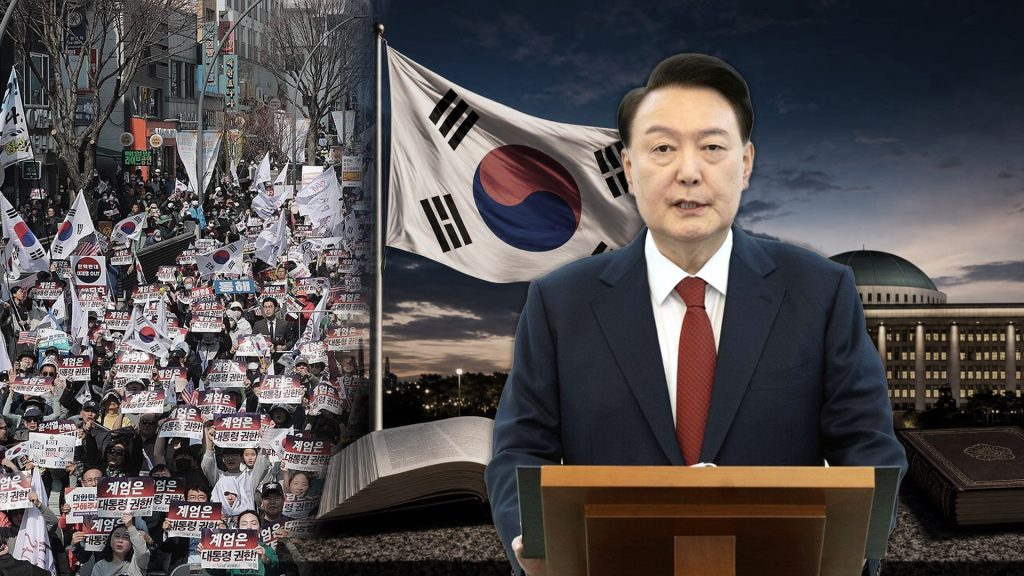
그리고 종중・종북인 반국가세력의 내란
and the Insurrection by Anti-State Forces—Pro-North and Pro-Communist Factions
글: 윤석열 대통령 변호인 송진호
by Song Jin-ho, Attorney for President Yoon Suk-yeol
자유민주주의 국가에서 선거는 체제의 근간입니다. 그러나 한국의 부정선거는 전자개표기가 전면 도입된 2002년부터 자행되었다고 의심받고 있습니다. 한국에서는 외부망과 연결된 선거관리위원회 서버, 서버의 비밀번호 ‘12345’, 선거구 인원수보다 많은 투표수, 접힌 자국이 없는 투표용지, 투표관리관의 인영이 제대로 찍히지 않은 투표용지, 전자개표기에 특정한 후보자의 표만 계속 카운팅되는 등 수많은 부정선거 의심 사례가 있었고, 이는 미국에서 발견된 부정선거 실태와 동일합니다. 이에 대해 윤석열 대통령은 한국 내 부정선거 여부를 확인할 수 있는 방법이 없었습니다. 선거인명부, 선관위 서버에 대한 모든 조사를 더불어민주당과 사법부가 막았기 때문이었고, 결국 대통령이 가진 비상계엄 절차에서 계엄 행정을 통해 확인할 수밖에 없었던 것입니다.
2022. 3. 9. 제20대 대통령 선거에서도 윤석열 후보는 이재명 후보를 선거 전날까지 10%가량 앞서는 것으로 확인됐지만, 정작 선거 당일에는 0.73%의 근소한 차이로 윤석열 후보가 승리하였는데, 부정선거 조작에도 승리할 수 있는 압도적인 격차를 벌인 결과 결국 아주 근소한 차이로 승리하였던 것입니다. 이에 대해 이재명과 더불어민주당은 어떤 이의도 제기하지 않았는데, 이는 선거에 승복한 것이 아니라, 문제를 제기하는 경우 부정선거가 밝혀질 것이 두려워 급하게 승복을 한 것입니다. 대통령 선거 이전인 2020. 4. 15. 제21대 국회의원선거에서도 더불어민주당은 부정선거를 통해 과반 의석을 훨씬 초과하는 의석수를 차지하였다고 의심받았는데, 윤석열 정부가 들어서자 이재명과 더불어민주당은 그러한 과반 의석을 이용해 수십 명의 무고한 고위공직자들에 대한 탄핵소추와 윤석열 정부의 핵심 예산을 모두 삭감하는 방법으로 국정을 마비시키고, 마약 등 범죄 수사를 하지 못하도록 하였으며, 또한 그들과 연계된 시민단체들을 통해 대통령 취임 전부터 윤석열 대통령 퇴진・탄핵 운동을 벌이기 시작하였습니다. 또한 12개의 혐의로 5개의 재판 및 수사를 받고 있는 이재명 자신과 더불어민주당 의원들의 비리를 수사하는 검사들에 대해서도 수사를 하지 못하도록 탄핵소추를 하였습니다. 윤석열 대통령이 2025. 4. 4.에 헌법재판소에서 탄핵이 되기 전까지 이재명과 더불어민주당은 22차례에 걸쳐 아무런 혐의 없는 국무위원 및 검사 등에 대한 탄핵소추를 의결하였고, 특히 법무부장관의 경우에는 국회에서 더불어민주당 대표인 이재명을 째려보았다는 이유로 탄핵소추를 하기까지 하였습니다. 한국에서는 탄핵소추가 되면 헌법재판소의 결정이 있기 전까지 직무가 정지되는데, 국무위원・검사들은 헌법재판소의 결정이 있기 전까지 대략 6개월간 국정 업무와 수사 등을 하지 못하는 사태가 계속 초래되었습니다. 이러한 법적인 문제 때문에 이재명과 더불어민주당이 탄핵소추 발의를 하면 그 대상이 되는 사람들은 행정 업무의 마비를 우려해 스스로 사퇴하는 일도 반복되었습니다. 이러한 더불어민주당의 국정 마비 및 수사를 막기 위한 탄핵소추 및 윤석열 대통령에 대한 퇴진 선동 및 시위는 모두 중국과 북한의 지령을 받은 것입니다. 이는 북한 간첩 수사와 재판 등에서 밝혀진 바 있으며, 계엄 직후 이재명과 더불어민주당이 제출한 윤석열 대통령에 대한 1차 탄핵소추 발의안의 내용을 살펴보면, 윤석열 정부가 친미・친일하고, 중국과 러시아와 관계를 등한시했다는 내용을 기재한 것을 보면 알 수 있습니다.
이러한 계속되는 부정선거 의심, 중국과 북한의 지령에 의한 이재명과 더불어민주당의 수십 차례의 무고한 공직자에 대한 탄핵소추 및 국가 핵심 예산에 대한 삭감 등을 통한 국정 마비와 마약 수사 방해, 자신들의 비리에 대한 수사 방해, 이재명과 더불어민주당 국회의원에 대한 재판을 하고 있는 사법부에 대한 협박 등을 보면서, 윤석열 대통령은 미국이 피를 흘려 지켜준 한국의 자유민주주의 체제가 붕괴될 수도 있다는 심각한 우려를 갖지 않을 수 없었습니다. 그러던 중 2024. 12. 2.에 더불어민주당이 감사원장에 대한 탄핵 발의를 하는 것을 보고, 계엄을 통해 대한민국의 현실을 국민에게 알리기로 하고 계엄 선포를 결심하게 되었습니다. 윤석열 대통령의 직전 대통령인 문재인 대통령 때 한국 경상북도 성주군에 미국의 사드(THAAD)가 배치되었는데, 이를 방해하기 위해 그 장비 반입 정보 기밀을 문재인 정부 안보실장 등이 중국과 반대 시위 단체에 유출한 것을 감사원이 감사하려 하였고, 또 선거관리위원회에 부정 채용이 만연하였는데 그 부정 채용을 감사원이 감사하려 하였습니다. 그러나 이재명과 더불어민주당은 부정선거 의심을 받는 선관위의 부정 채용 및 중국과 북한을 위한 문재인 정부의 간첩 행위 조사를 막고자 2024. 12. 2.에 감사원장을 탄핵 발의하였던 것입니다. 이를 본 윤석열 대통령은 이러한 반국가세력의 만행을 더 이상 지켜볼 수 없어 자유민주주의 헌정질서를 수호하기 위해 2024. 12. 2.에 계엄을 결심하고, 2024. 12. 3. 저녁 10:30분에 계엄을 선포하게 된 것입니다.
윤석열 대통령의 비상계엄은 국민들이 모두 인지할 수 있도록 국민들이 깨어 있는 2024. 12. 3. 저녁 10:30에 선포되었고, 2024. 12. 4. 01:03에 국회의 계엄 해제 요구안 의결에 따라 병력을 국회에서 즉시 철수하여 실질적으로 해제 조치하였으며, 이후 형식적으로는 국무회의를 거쳐 2024. 12. 4. 04:29에 해제를 선포하였습니다. 실질적으로 계엄은 불과 약 2시간 30분 만에 해제된 것입니다. 계엄에는 극소수의 군인과 경찰이 동원되었고, 이들이 임무를 수행한 곳은 국회와 선거관리위원회 관련 건물들이었습니다. 많은 사람들이 국회에 몰릴 것을 우려해 질서 유지를 위해 국회에 투입되었고, 선거관리위원회 관련 시설에는 부정선거 세력이 계엄 시 부정선거의 증거들을 외부로 반출할 것을 우려해 투입되었습니다. 선거관리위원회 서버실에는 국가정보원이 과거 선거관리위원회 전산 관리 상태를 점검한 후 지적했던, 외부망과의 접속 차단 여부, 비밀번호가 ‘12345’로 설정되어 있었던 것 등이 시정되었는지 등을 확인하기 위해서였습니다. 이러한 기본적인 확인조차 선거관리위원회와 사법부의 방해로 할 수 없었습니다.
국회의 계엄 해제 요구안 가결 시간인 2024. 12. 4. 01:03까지 국회 경내에 투입된 병력은 고작 수도방위사령부 15명, 특전사령부 병력은 약 270명이 전부였습니다. 수도방위사령부 병력 15명은 총도 가지지 않고 비무장으로 국회 경내로 진입했고, 특전사 병력은 실탄을 개인 소지하지 않고 빈총만을 들고 국회 경내로 진입했습니다. 이러한 소수 병력에 비해 당시 국회 인근에는 1~2만 명의 시민들이 모여 있었고, 또한 수천 명의 시민들이 무단으로 담을 넘어 국회로 침입한 상태였습니다. 질서 유지를 위해 국회 경내로 투입된 군인들이 오히려 시민들에 의해 폭행을 당하고, 군용물을 빼앗기는 사태가 발생하였지만, 군인들은 시민들에게 단 하나의 물리적인 행동도 하지 않았고, 부상을 입은 단 한 명의 시민도 없었습니다.
당시 대통령이 생각한 계엄은 과거처럼 수만 명의 군병력을 동원한 계엄이 아닌, 국민에게 한국의 자유민주주의 붕괴의 현실을 알리는 메시지성 계엄, 경고성 계엄이었습니다. 만약 윤석열 대통령이 친위쿠데타나 내란을 계획하였다면, 국회 업무가 없는 토요일 새벽을 이용하여 전격적으로 계엄을 선포하였을 것이고, 무장한 수만 명의 병력을 동원하였을 것이며, 또한 계엄 선포 전에 이미 병력을 국회 등으로 보내 계엄 선포와 동시에 봉쇄하고 국회의원들을 전격적으로 체포하였을 것입니다. 지구상 어디에도 실탄도 휴대하지도 않고, 더 나아가 총도 휴대하지 않으며, 국회의 해제 요구에 즉각적으로 병력을 철수한 내란은 존재하지 않을 것입니다. 더욱이 국회의원 어느 누구도 국회로 들어가 업무를 보는데 아무런 제지도 받은 바 없으며, 이는 국회의원들이 신속히 국회 본회의장에 모여 계엄 해제 의결을 한 것에 비추어 보면 알 수 있는 것입니다.
그러나 이재명과 더불어민주당 등 반국가세력들은 윤석열 대통령의 계엄 선포를 즉각적으로 내란으로 몰면서, 이미 중국과 북한에 매수된 언론을 이용하여 윤석열 대통령에 대한 탄핵 몰이를 시작하였고, 국민의힘 일부 의원들이 가담하여 윤석열 대통령에 대한 탄핵소추안을 통과시켰습니다. 그러나 아직 헌법재판소의 탄핵 결정이 있기 전까지는 여전히 현직 대통령임에도 불구하고 이들은 자신들의 부정선거, 종중・중북 간첩 활동들이 발각될까 두려워 현직 대통령에 대해 헌법상 금지된 강제수사를 시작하였고, 그 수사를 맡은 기관인 고위공직자범죄수사처는 내란 혐의에 대해 수사권이 없었는데도, 사법부는 반헌법적 법률 해석을 통해 현직 대통령 수사를 허용하면서 법과 규정을 위반하는 내용을 기재한 영장을 발부하는 등 수사에 적극 협조하였습니다. 지금까지 부정선거를 자행했고 이를 감추었다고 의심받는 이재명 및 더불어민주당, 사법부 등이 합세하여 헌법과 법률을 위반하여 현직 대통령에 대한 강제수사를 하였습니다. 공수처는 2025. 1. 15.에 경찰 3,000명을 동원하여 대통령이 머물고 있는 관저 울타리를 차량과 전기톱 등을 이용하여 부수고 들어와 대통령을 체포하였고, 이 과정에서 많은 시민들이 부상을 입었습니다. 어떻게 이러한 일들이 법치를 근간으로 하고 있는 현대 자유민주주의 국가에서 일어날 수 있겠습니까? 이는 모두 자유민주주의 법치를 부정하는 이재명과 더불어민주당과 사법부에 의해 자행된 것이었습니다.
윤석열 대통령은 이후 구속된 상태로 재판을 받고 있고, 내란 혐의에 대해 1심에서 무기징역을 선고받았습니다. 윤석열 대통령뿐만 아니라, 계엄에 동원된 군인과 경찰 관련자, 계엄 선포 전 국무회의에 참여했던 국무위원, 대통령 경호 관계자 등 많은 사람들이 재판을 받고 있고, 또 십 년이 넘는 형을 선고받는 등 2, 3심 재판이 진행 중에 있습니다. 그러나 이러한 재판들은 모두 결론을 정해놓고 형식적으로 재판만 진행되고 있는 상황입니다. 더욱이 이재명과 더불어민주당, 사법부는 구속되어 있는 윤석열 대통령에 대해 인권유린을 자행하고 있습니다. 구속되어 재판을 받고 있는 윤석열 대통령에 대해 특검을 만들어 쪼개기 기소로 8개의 재판을 진행하여 재판 고문을 하고 있고, 또 특검은 지속적으로 대통령에 대한 출석을 요구하고 이에 불응하자 교도관을 시켜 대통령을 강제로 버스에 태우려 하거나, 또 앉아 있는 윤석열 대통령을 그대로 들어서 호송차에 강제로 태워 출석시키려 하는 등 물리력을 행사하여 폭행하였고, 지병을 앓고 있는 윤석열 대통령이 외부 진료 시에도 국민들이 모두 보는 앞에서 수갑과 전자발찌를 채워 노출시키는 등 이루 말할 수 없는 인격적 모독과 인권유린을 서슴지 않고 있습니다. 스스로 이러한 인간적 모욕감을 느끼도록 하여 극단적 선택을 하게끔 유도하기 위함이었습니다.
한미관계는 혈맹입니다. 한국의 자유민주주의를 위해 수많은 미국의 젊은이들은 기꺼이 희생을 했습니다. 그리고 한국은 굳건한 한미동맹을 통한 자유민주주의 체제하에 발전을 이뤄왔습니다. 그러나 미국의 젊은이들의 목숨과 바꿔 지켰던 한국의 자유민주주의와 종교의 자유는 지금 기로에 서 있습니다. 부정선거와 사법부의 좌경화, 언론의 종중·종북화로 인해 공산주의와 사회주의로 가는 문을 이미 열었고, 그 길로 진입하고 있습니다. 한국은 전 세계 부정선거의 중심으로 의심되고 있고, 또 한국에서 얻은 부정선거 노하우가 그대로 미국과 다른 나라들에 적용되고 있다고 의심되고 있습니다. 한국은 이미 자정 능력을 상실했고, 이재명과 더불어민주당은 1당 독재의 기초를 완전히 마련하였으며, 미국의 도움이 없이는 다시 자유민주주의 진영으로 돌아갈 수 없습니다. 끝까지 자신을 희생하여 자유민주주의와 종교의 자유를 지키고자 했던 윤석열 대통령에 대해 미국의 관심과 노력이 간절히 필요하며, 부디 한국을 외면하지 말고, 다시 한 번 굳건한 한미동맹을 통한 진정한 자유민주주의와 종교의 자유가 이뤄질 수 있도록 한국민을 도와주십시오.
2026. 5. 30.
In a liberal democratic nation, elections are the foundation of the system. However, there are suspicions that election fraud in South Korea has been occurring since 2002, when electronic vote-counting machines were fully introduced. In South Korea, there have been numerous suspected cases of election fraud, including National Election Commission servers connected to external networks, the server password “12345,” vote counts exceeding the number of registered voters in a district, ballots with no crease marks, ballots where the election supervisor’s fingerprint was not properly stamped, and electronic vote-counting machines continuously counting votes only for specific candidates—all of which mirror the patterns of election fraud discovered in the United States. Regarding this, President Yoon Suk-yeol had no way to verify whether election fraud had occurred in South Korea. This was because the Democratic Party of Korea and the judiciary blocked all investigations into the voter registry and the National Election Commission’s servers, leaving the President with no choice but to verify the situation through martial law administration under the emergency martial law procedures available to him.
In the 20th Presidential Election on March 9, 2022, candidate Yoon Suk-yeol was confirmed to be leading candidate Lee Jae-myung by about 10% up until the day before the election. However, on election day itself, Yoon Suk-yeol won by a narrow margin of 0.73%. This was the result of having built such an overwhelming lead that he could win even in the face of election fraud manipulation, ultimately securing victory by a very narrow margin. Lee Jae-myung and the Democratic Party of Korea raised no objections to this outcome. This was not an acceptance of the election results, but rather a hasty concession out of fear that raising objections would lead to the exposure of election fraud. Even in the 21st National Assembly election held on April 15, 2020, prior to the presidential election, the Democratic Party of Korea was suspected of securing a number of seats far exceeding a majority through election fraud. Once the Yoon Suk-yeol administration took office, Lee Jae-myung and the Democratic Party of Korea used that majority to paralyze state affairs by impeaching dozens of innocent high-ranking public officials and slashing the core budget of the Yoon Suk-yeol administration. They also obstructed criminal investigations, including those into drug-related crimes, and, through civic groups affiliated with them, began a campaign to oust and impeach President Yoon Suk-yeol even before his inauguration. Furthermore, they filed impeachment motions against prosecutors investigating corruption involving Lee Jae-myung himself—who is currently facing five trials and investigations on 12 charges—and Democratic Party lawmakers, in an attempt to prevent these investigations from proceeding. Until President Yoon Suk-yeol was impeached by the Constitutional Court on April 4, 2025, Lee Jae-myung and the Democratic Party of Korea passed resolutions to impeach cabinet members and prosecutors—who were not facing any charges—on 22 separate occasions. In the case of the Minister of Justice, they even went so far as to file an impeachment motion simply because he had glared at Lee Jae-myung, the leader of the Democratic Party of Korea, in the National Assembly. In South Korea, once an impeachment motion is filed, the accused is suspended from duty until the Constitutional Court issues a ruling. This led to a situation where cabinet members and prosecutors were unable to perform their duties—including governing and conducting investigations—for approximately six months pending the Court’s decision. Due to these legal complications, whenever Lee Jae-myung and the Democratic Party proposed an impeachment motion, the targets often resigned voluntarily out of concern that their resignations would paralyze administrative operations. These impeachment motions by the Democratic Party of Korea—aimed at paralyzing state affairs and obstructing investigations—as well as the agitation and protests calling for President Yoon Suk-yeol’s resignation, were all carried out under orders from China and North Korea. This has been revealed through investigations and trials of North Korean spies, and it is evident from the content of the first impeachment motion against President Yoon Suk-yeol submitted by Lee Jae-myung and the Democratic Party of Korea immediately after martial law was declared, which alleged that the Yoon Suk-yeol administration was pro-U.S. and pro-Japan while neglecting relations with China and Russia.
In light of these persistent allegations of election fraud, the dozens of impeachment motions filed by Lee Jae-myung and the Democratic Party against innocent public officials under orders from China and North Korea, the paralysis of state affairs caused by cuts to core national budgets, the obstruction of drug investigations, the obstruction of investigations into their own corruption, and threats against the judiciary currently trying Lee Jae-myung and Democratic Party lawmakers—President Yoon Suk-yeol could not help but harbor serious concerns that South Korea’s liberal democratic system, which the United States defended at the cost of blood, might collapse. Then, upon seeing the Democratic Party of Korea move to impeach the Auditor General on December 2, 2024, he decided to declare martial law to inform the public of the reality facing the Republic of Korea. During the administration of President Moon Jae-in, President Yoon’s immediate predecessor, the U.S. THAAD system was deployed in Seongju County, North Gyeongsang Province. To obstruct this, the Director of National Security under the Moon administration and others leaked classified information regarding the equipment’s delivery to China and anti-THAAD protest groups, and the Board of Audit and Inspection had intended to investigate this. Additionally, fraudulent hiring practices were rampant within the National Election Commission, and the Board of Audit and Inspection had intended to investigate these as well. However, on December 2, 2024, Lee Jae-myung and the Democratic Party of Korea moved to impeach the head of the Board of Audit and Inspection in an attempt to block investigations into the National Election Commission’s irregular hiring—which was suspected of being linked to election fraud—and the Moon Jae-in administration’s espionage activities on behalf of China and North Korea. Upon witnessing this, President Yoon Suk-yeol, unable to stand idly by in the face of such atrocities committed by anti-state forces, decided to impose martial law on December 2, 2024, to safeguard the constitutional order of liberal democracy, and subsequently declared martial law at 10:30 p.m. on December 3, 2024.
President Yoon Suk-yeol’s state of emergency was declared at 10:30 p.m. on December 3, 2024, and, following the National Assembly’s resolution to lift martial law at 1:03 a.m. on December 4, 2024, troops were immediately withdrawn from the National Assembly, effectively lifting the state of emergency. Subsequently, the lifting was formally declared at 4:29 a.m. on December 4, 2024, following a Cabinet meeting. In effect, martial law was lifted in just about two and a half hours. Only a very small number of soldiers and police were mobilized for martial law, and they were deployed to the National Assembly and buildings related to the National Election Commission. They were deployed to the National Assembly to maintain order out of concern that large crowds might gather there, and they were deployed to facilities related to the National Election Commission out of concern that forces involved in election fraud might attempt to remove evidence of fraud to the outside during martial law. The purpose of the deployment to the National Election Commission’s server room was to verify whether issues previously identified by the National Intelligence Service during an inspection of the Commission’s IT management—such as whether connections to external networks had been blocked and whether passwords were set to “12345”—had been rectified. Even these basic checks could not be carried out due to obstruction by the National Election Commission and the judiciary.
By 1:03 a.m. on December 4, 2024—the time the National Assembly passed the motion to lift martial law—the total number of troops deployed within the National Assembly grounds consisted of a mere 15 personnel from the Capital Defense Command and approximately 270 personnel from the Special Forces Command. The 15 troops from the Capital Defense Command entered the National Assembly grounds unarmed, without even carrying rifles, while the Special Forces troops entered carrying only empty rifles, without any live ammunition on their persons. In contrast to this small force, 10,000 to 20,000 citizens had gathered near the National Assembly at the time, and thousands more had already trespassed into the Assembly grounds by scaling the walls. Although the soldiers deployed to the National Assembly grounds to maintain order were assaulted by citizens and had their military equipment seized, the soldiers did not take a single physical action against the citizens, and not a single citizen was injured.
The martial law the President had in mind at the time was not the kind that mobilized tens of thousands of troops as in the past, but rather a symbolic martial law intended to send a message to the public about the reality of the collapse of South Korea’s liberal democracy—a warning. If President Yoon Suk-yeol had planned a coup d’état or an insurrection, he would have declared martial law abruptly in the early hours of a Saturday morning—when the National Assembly was not in session—mobilized tens of thousands of armed troops, and, prior to the declaration, already dispatched troops to the National Assembly and other locations to seal them off the moment martial law was declared and arrest lawmakers immediately. Nowhere on earth has there ever been an insurrection where troops carried no live ammunition, let alone firearms, and immediately withdrew upon the National Assembly’s demand to lift martial law. Furthermore, not a single lawmaker faced any obstruction in entering the National Assembly to conduct business, as evidenced by the fact that lawmakers swiftly gathered in the plenary hall to pass a resolution lifting martial law.
However, anti-state forces such as Lee Jae-myung and the Democratic Party of Korea immediately labeled President Yoon Suk-yeol’s declaration of martial law as an act of insurrection. Utilizing media outlets already bought off by China and North Korea, they launched a campaign to impeach President Yoon Suk-yeol, and with the participation of some lawmakers from the People Power Party, they passed an impeachment motion against him. Yet, even though he remains the incumbent president pending a decision by the Constitutional Court, these individuals—fearing that their election fraud and and espionage activities involving China and North Korea, they initiated a forced investigation against the sitting president—an act prohibited by the Constitution. The Corruption Investigation Office for High-Ranking Officials, the agency in charge of the investigation, lacked the authority to investigate charges of insurrection; yet, the judiciary actively cooperated with the investigation by permitting the probe of the sitting president through unconstitutional legal interpretations and issuing warrants containing violations of laws and regulations. Lee Jae-myung, the Democratic Party of Korea, and the judiciary—all of whom are suspected of having committed and concealed election fraud—have joined forces to conduct a compulsory investigation into the sitting president in violation of the Constitution and the law. On January 15, 2025, the High Prosecutors’ Office mobilized 3,000 police officers to break through the fence surrounding the presidential residence where the President was staying using vehicles and chainsaws, and arrested the President; many citizens were injured in the process. How could such events occur in a modern liberal democratic nation founded on the rule of law? All of this was perpetrated by Lee Jae-myung, the Democratic Party of Korea, and the judiciary, who deny the rule of law in a liberal democracy.
President Yoon Suk-yeol has since been standing trial while in custody and was sentenced to life imprisonment in the first instance on charges of insurrection. Not only President Yoon Suk-yeol, but also many others—including soldiers and police officers mobilized under martial law, cabinet members who participated in the cabinet meeting prior to the declaration of martial law, and presidential security personnel—are currently on trial, with second and third instance trials underway, resulting in sentences of over ten years. However, these trials are all proceeding merely as a formality, with the conclusions already predetermined. Furthermore, Lee Jae-myung, the Democratic Party of Korea, and the judiciary are committing human rights abuses against President Yoon Suk-yeol, who remains in custody. Regarding President Yoon Suk-yeol, who is currently detained and on trial, a special prosecutor has been appointed to conduct eight separate trials through fragmented indictments, effectively subjecting him to judicial torture. Furthermore, the special prosecutor has continuously demanded the President’s attendance; when he refused, they attempted to forcibly load him onto a bus using prison guards, and even went so far as to physically assault him by lifting President Yoon—who was seated—and forcibly placing him into a transport vehicle to bring him to court. Even when President Yoon Suk-yeol, who suffers from a chronic illness, goes for medical treatment outside the detention center, they do not hesitate to subject him to unspeakable personal humiliation and human rights abuses, such as handcuffing him and fitting him with an electronic ankle monitor in full view of the public. The intent was to induce him to make an extreme choice by making him feel this profound sense of humiliation.
The U.S.-Korea relationship is a blood alliance. Countless young Americans willingly sacrificed their lives for South Korea’s liberal democracy. And South Korea has achieved its development under a liberal democratic system through a strong U.S.-South Korea alliance. However, South Korea’s liberal democracy and religious freedom—which were preserved at the cost of the lives of young Americans—now stand at a crossroads. Due to election fraud, the left-wing shift of the judiciary, and the media’s alignment with pro-North Korean factions, the door to communism and socialism has already been opened, and we are entering that path. South Korea is suspected of being the epicenter of election fraud worldwide, and there are suspicions that the know-how gained from fraudulent elections in South Korea is being directly applied in the United States and other countries. South Korea has already lost its ability to self-correct, and Lee Jae-myung and the Democratic Party of Korea have fully laid the groundwork for a one-party dictatorship; without American assistance, it cannot return to the camp of liberal democracy. President Yoon Suk-yeol, who was willing to sacrifice himself to the very end to defend liberal democracy and religious freedom, desperately needs the United States’ attention and support. Please do not turn your back on South Korea; please help the Korean people so that true liberal democracy and religious freedom can be achieved once again through a strong U.S.-South Korea alliance.
May 30, 2026